

Many readers lose time because they keep going back over the same lines.
Sometimes rereading is useful. If a sentence is complex, important, or confusing, going back can help you understand it properly.
The problem is unnecessary rereading.
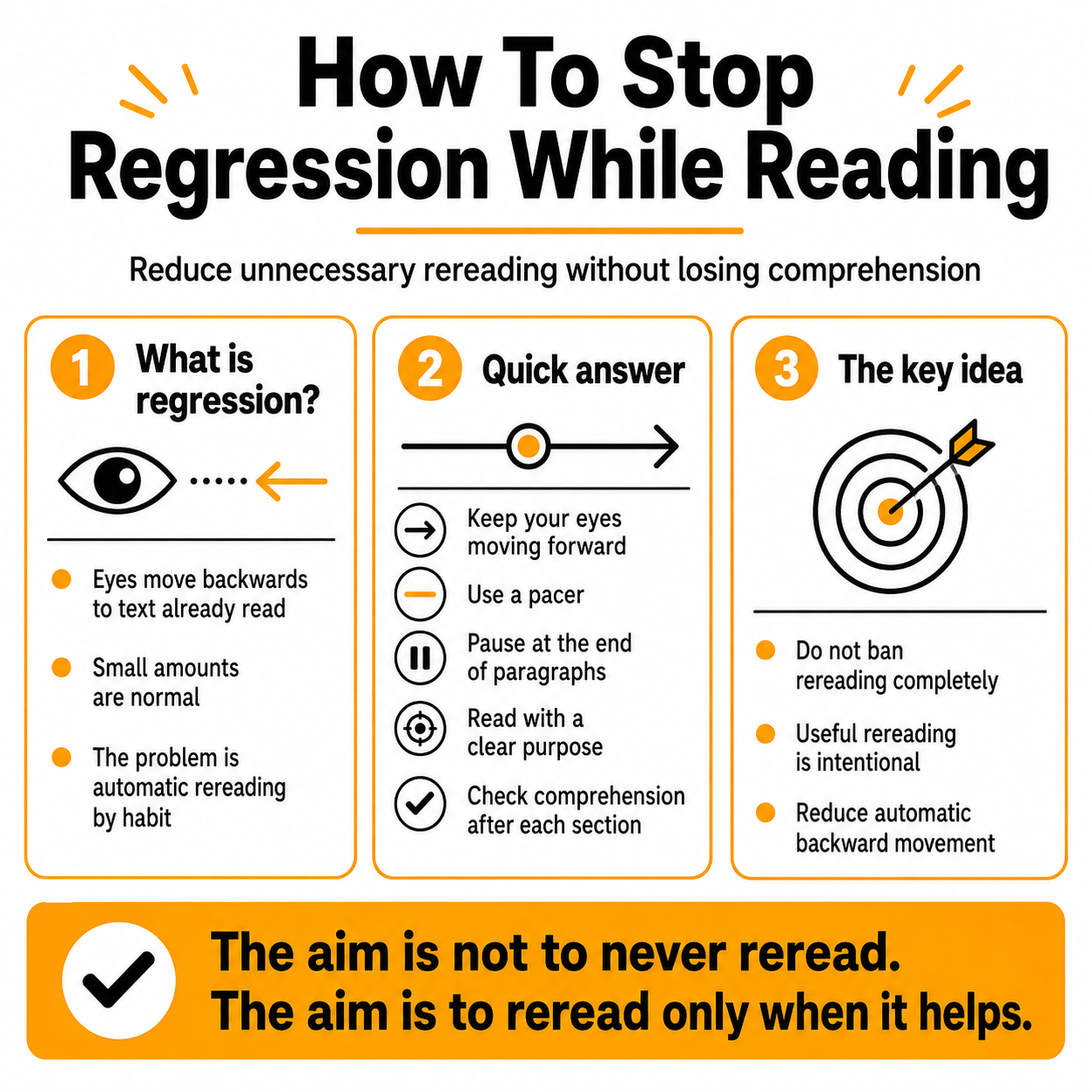
This is called regression. It happens when your eyes move backwards to words, phrases, or sentences you have already read, often out of habit rather than need.
Regression can make reading feel slow, frustrating, and mentally tiring. The aim is not to ban rereading completely, but to know when going back helps and when it simply breaks your flow.
You can stop regression while reading by keeping your eyes moving forward, using a pacer, pausing at the end of paragraphs, reading with a clear purpose, and checking comprehension after each section.
Instead of jumping back mid-sentence, finish the paragraph first and then decide whether rereading is actually needed. Useful rereading is part of careful reading. The aim is to reduce automatic rereading that happens because of distraction, doubt, or poor reading flow.
{{EMBED}}
Regression in reading means moving your eyes backwards to re-read words or sentences you have already seen.
It can happen in small ways, such as glancing back at one word, or in bigger ways, such as rereading an entire sentence or paragraph.
A small amount of regression is normal. Readers often look back when:
It becomes a problem when this backward movement happens automatically and too often.
If your eyes keep jumping backwards even when you understand enough to continue, regression is no longer helping. It is slowing you down.
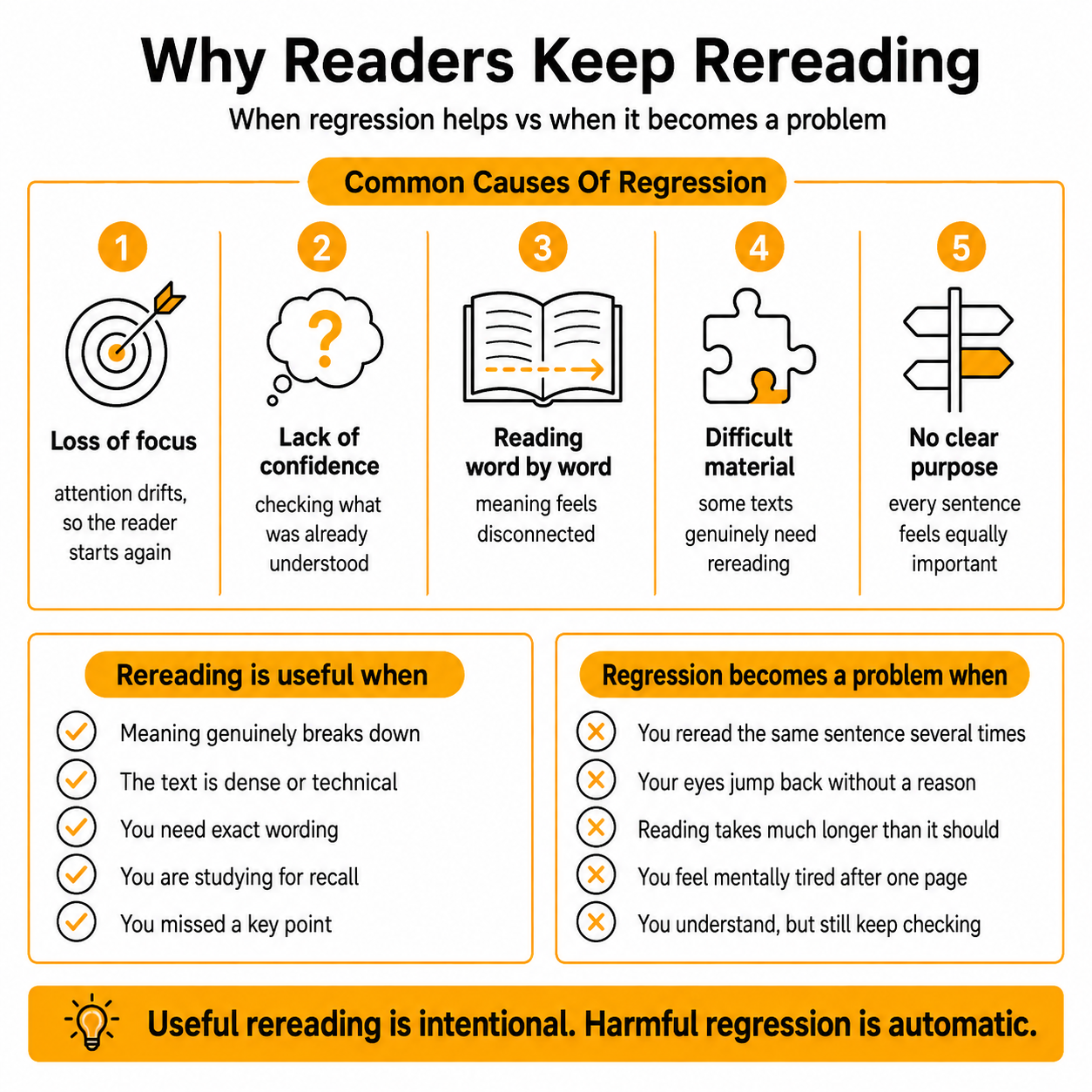
Most regression happens for one of five reasons.
Your eyes continue moving, but your attention drifts.
You reach the end of a sentence and realise you did not take in the meaning. So you go back and start again.
This is one of the most common reasons people reread.
Some readers understand the sentence, but they still feel unsure.
They go back to confirm what they already understood. This can become a habit, especially when reading under pressure.
When you read every word as a separate unit, the sentence can feel disconnected.
You may go back because the meaning does not feel complete. Phrase reading can help because it trains you to process short groups of words instead of isolated words. If the bigger issue is mentally saying every word, that is closer to subvocalising while reading than regression.
Some material genuinely needs rereading.
Technical, academic, legal, financial, or unfamiliar content often requires a slower pace. In this case, regression may be useful.
If you do not know what you need from the text, every sentence feels equally important.
That makes it harder to move forward with confidence. You may keep going back because you are not sure what matters.
Rereading is not always bad.
You should reread when:
Useful rereading is intentional. You choose to go back because the text requires it.
The unnecessary version is different. It happens without a clear reason. Your eyes jump back automatically, often because your focus, confidence, or reading rhythm has dropped.
The point is not to stop all rereading. It is to stop going back by habit.
It becomes a problem when backward movement interrupts your reading flow too often.
You may notice this if:
This can affect both reading speed and comprehension.
Regression slows your pace because you keep covering the same ground. It can also weaken comprehension because your attention becomes focused on checking words instead of following ideas.
Good reading is not just about moving forward quickly. It is about keeping enough flow to understand the text as it develops.
The safest way to reduce regression is to improve control, not force speed.
Here are practical methods that help.
A pacer is your finger, pen, cursor, or pointer.
Move it smoothly under each line as you read. This gives your eyes a forward path and reduces the chance of jumping backwards.
Keep the pace comfortable. If you move too fast, comprehension may drop and you will want to reread even more.
Start with easy material and use the pacer for 5 to 10 minutes at a time.
The purpose is not to rush. It is to train forward movement, which is why a pacer is one of the simpler speed reading techniques to practise first.
Many readers go back too quickly.
Instead of rereading in the middle of a sentence, try to finish the paragraph first. Then pause and ask:
“What was the main point?”
If you can answer, continue.
If you cannot answer, reread the paragraph with a clear purpose. This turns rereading into a decision instead of a reflex.
This one habit can reduce a lot of unnecessary regression.
Before reading, ask yourself what you need from the text.
For example:
A clear purpose helps your brain decide what matters.
Without a purpose, you are more likely to reread because you are unsure whether you missed something important.
Word-by-word reading can make sentences feel slow and disconnected.
Phrase reading helps you take in small groups of words as units of meaning.
For example, instead of reading:
“Many / readers / lose / time / by / going / back”
Try to see:
“Many readers / lose time / by going back”
Do not force large chunks. Start with short phrases.
This improves flow and reduces the need to go back because meaning becomes easier to follow.
Regression often happens when attention is weak.
Before reading, remove obvious distractions:
Short focused reading is usually better than long distracted reading.
If your attention keeps breaking, your eyes will keep going back.
Trying to read difficult material too fast can increase regression.
If the text is technical, unfamiliar, or detail-heavy, slow down before comprehension breaks.
You can still read efficiently, but the pace should match the material.
Strong readers do not use the same speed for every text. They adjust based on difficulty and purpose.
This is also why regression should not be treated as a failure. Sometimes going back is the correct reading decision.
After each section, ask yourself:
If you can answer, keep going.
If you cannot, reread with intention.
This helps you build confidence. When you know you are understanding enough, you feel less need to keep checking the same lines.
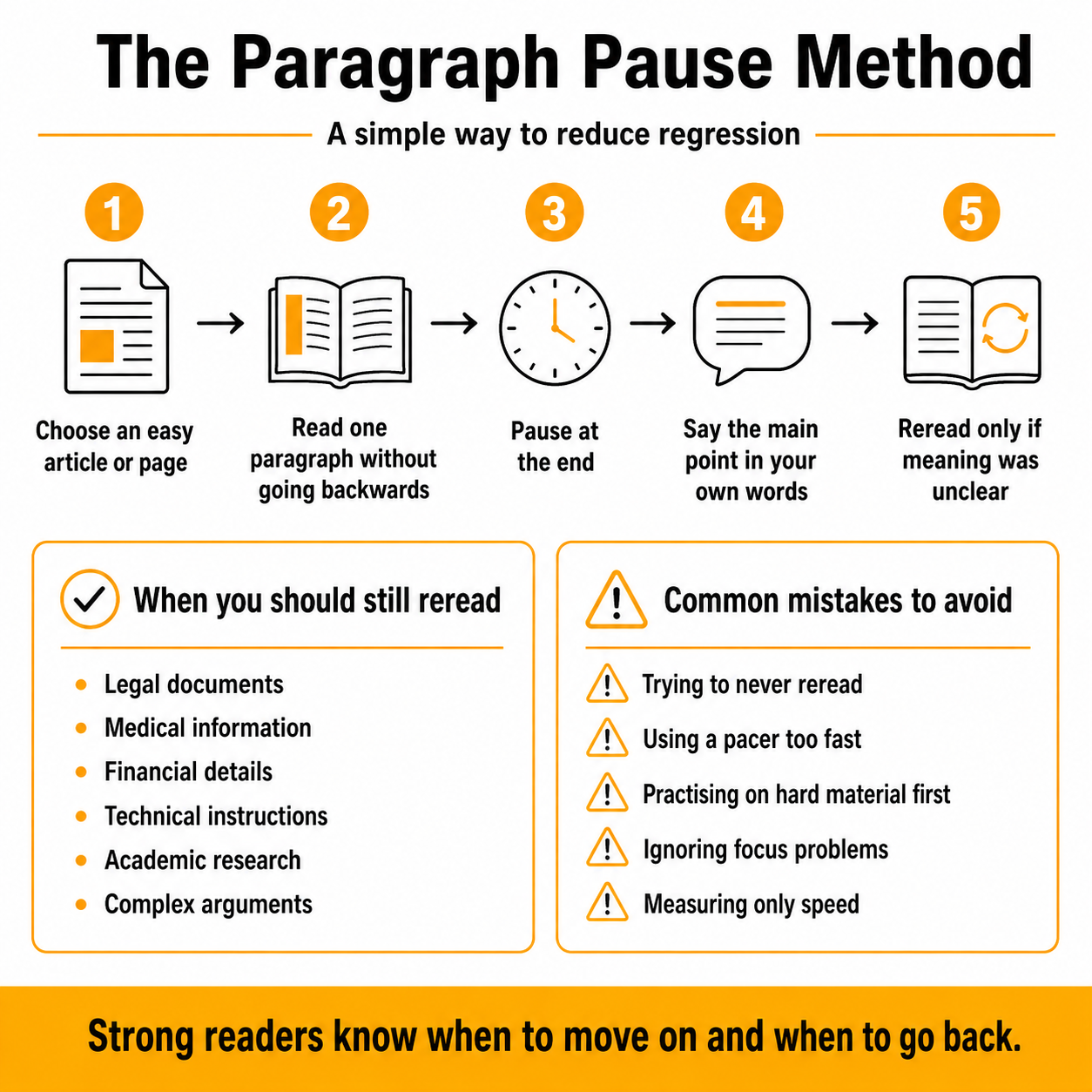
A simple way to reduce regression is the paragraph pause method.
Here is how it works:
Practise this for 10 minutes.
This method works because it gives your brain a better place to check comprehension. Instead of interrupting every sentence, you review the meaning after a complete idea.
That keeps your reading flow smoother.
Regression can reduce reading speed because you cover the same text multiple times.
For example, if you read one paragraph three times because your focus keeps breaking, your actual reading time increases even if your eye movement feels active.
This is why improving reading speed is not only about moving faster. It also depends on understanding what speed reading is, when it helps, and when a slower pace is the better choice.
Sometimes the biggest improvement comes from wasting less movement.
If you reduce unnecessary rereading, keep your eyes moving forward, and check comprehension at better points, your reading can become faster without feeling rushed.
For a broader guide, read our article on how to improve reading speed without losing comprehension.
Regression and skimming are different reading behaviours.
Regression means going backwards in the text.
Skimming means moving quickly through text to get the general idea.
Both can be useful in the right context. Both can also cause problems if used badly.
If you skim when you need detail, comprehension will suffer. If you regress when you already understand enough, speed will suffer.
The real skill is knowing which reading mode fits the task.
This is unrealistic.
Some rereading is useful. The aim is to reduce unnecessary backward movement, not remove every glance back.
If the pacer moves faster than your comprehension, you will feel lost and reread more.
Start at a comfortable pace.
Dense academic or technical text is not the best place to start.
Use easier material while training the habit, then apply it gradually to harder reading.
If you are distracted, regression will keep happening.
Fix the reading environment before blaming your reading ability.
A higher WPM score means little if understanding drops.
Always check comprehension.
You should still reread when the text requires accuracy.
Slow down and reread when reading:
In these cases, rereading is not a bad habit. It is part of careful reading.
The problem is not rereading itself. The problem is rereading without a reason.
Regression is one of the main reasons reading feels slow.
It happens when your eyes move backwards to reread words, sentences, or paragraphs. Sometimes this helps. But when it becomes automatic, it breaks flow, reduces confidence, and makes reading take longer than it should.
To reduce this habit, use a pacer, pause at the end of paragraphs, read with a clear purpose, practise phrase reading, reduce distractions, and check comprehension after each section.
The aim is not to never reread again.
The aim is to reread only when it helps.
If you want a structured way to practise smoother reading habits, the Speed Reading Mastery course gives you guided reading exercises, pacing practice, and comprehension checks.
Regression in reading is when your eyes move backwards to reread words, sentences, or paragraphs you have already read. A small amount is normal, but frequent regression can slow reading down.
Regression is not always bad. It can help when the text is complex or important. It becomes a problem when you reread automatically even though you understood enough to continue.
Pause before going back. Try to finish the paragraph first, then ask what the main point was. If you understand it, continue. If the meaning broke down, reread with a clear purpose.
Yes, frequent regression can slow reading speed because you keep covering the same text again. Reducing unnecessary rereading can improve reading flow without forcing you to rush.
A finger, pen, or cursor can help guide your eyes forward and reduce unnecessary regression. Use it gently and keep the pace comfortable enough to protect comprehension.